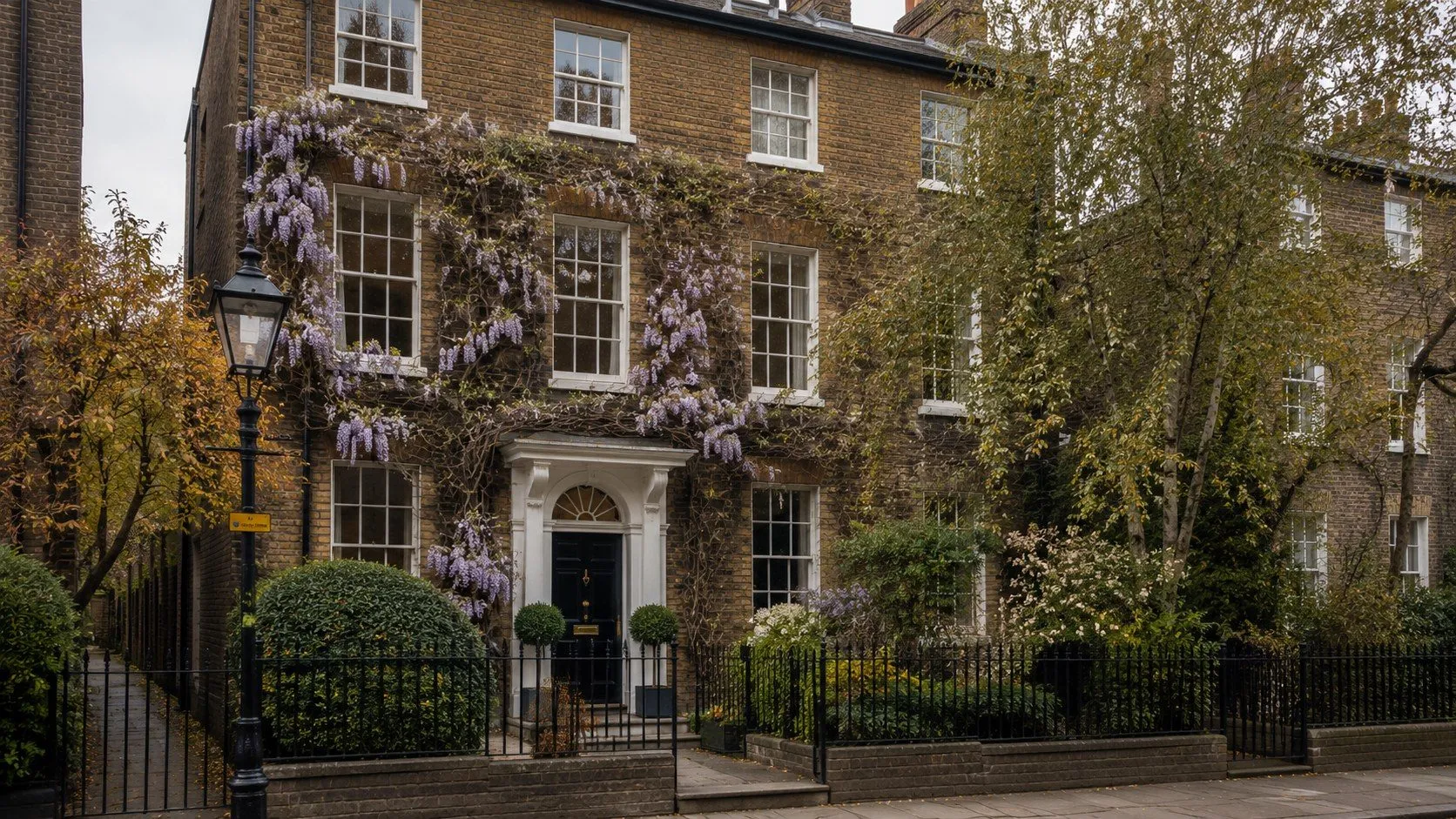
What makes Hampstead different from other prime London locations
NW3 occupies a singular position among prime London residential locations. It is not a district defined primarily by wealth, though wealth is present throughout, it is a district defined by character. The village feel, the topography, the density of mature trees and the remarkable survival rate of period architecture across nearly four centuries of continuous development create an environment that is genuinely different to the Mayfair townhouse or the Chelsea lateral flat.
From a planning and construction perspective, this distinctiveness translates into a more complex consent environment than most SW and W postcodes. Hampstead has a high concentration of listed buildings across both Grade I and Grade II categories, restrictive conservation area policies administered by Camden LPA, and a density of Tree Preservation Orders that creates constraints on external works that many clients, and some contractors. Do not anticipate. The combination of high land values and genuine period character creates strong incentive to refurbish rather than replace, but the consent route to that refurbishment requires experience that a contractor unfamiliar with Camden's policies simply will not have.
Period property types in Hampstead and what they require
The housing stock in NW3 spans a wider range of typologies than most of prime London. Georgian terraces in the older parts of the village retain original sash windows, cornicing, and fireplaces: all potentially subject to listed building consent requirements even for like for like replacement, and all requiring specialist trades capable of working to period specification. The tolerance for contractor inexperience with lime plaster or traditional joinery profiles is essentially zero: the building will tell you immediately, and so will Camden's conservation officers.
Victorian semidetached villas, numerous in the streets east of the Heath, frequently offer significant potential for rear addition, but that potential must be assessed against conservation area policies that limit the height, massing, and materials of any extension. Edwardian detached houses on generous plots, many with garden structures and outbuildings in various states of repair, require careful assessment of what is curtilage listed and what is not. Arts and Crafts properties: a surprisingly significant presence in certain NW3 streets, involve original tile work, exposed structural timber, and material specifications that have no modern equivalent and must be sourced through specialist suppliers or fabricated to match.
Crown Building has worked across all four of these typologies in Hampstead. The practical consequence of that breadth is not merely a portfolio talking point, it means our site managers and specialist subcontractors understand the structural characteristics, material requirements, and consent sensitivities of each building type before they set foot on site.
Listed buildings and conservation areas in NW3
Hampstead has one of the highest concentrations of listed buildings of any residential neighbourhood in London. The distinction between the two principal consent regimes is important to understand clearly. Listed building consent applies to any property on the Statutory List of Buildings of Special Architectural or Historic Interest, it covers not only structural alterations but internal works that affect the character of the building, including the removal or alteration of original features. Even repainting a listed building in a different colour can technically require consent in certain circumstances.
Conservation area consent and Article 4 directions are separate instruments affecting unlisted properties within designated conservation areas. An unlisted house in Hampstead village may not require listed building consent, but it may still require full planning permission for works that would be Permitted Development on an identical property elsewhere in London. Including window replacement, changes to roof materials, and the addition of outbuildings or extensions above certain thresholds.
Crown Building manages listed building consent applications and Conservation Area submissions as part of the project process, we do not leave clients to navigate these relationships alone. For a detailed treatment of the technical and practical aspects of listed building work, our Listed Building Guide covers the consent process and contractor selection criteria in full.
Cost ranges for Hampstead period home renovation
Premium
£175 to 250/sq ft
Quality materials, experienced contractor, full M&E. Appropriate for investment grade London refurbishments.
Luxury
£250 to 400/sq ft
High spec finishes, bespoke joinery, imported stone, smart home integration. Crown Building's core range.
Ultra Premium
£400+/sq ft
Bespoke everything, period accurate joinery profiles, specialist heritage materials, full smart home. Larger detached properties.
Hampstead period home renovations typically sit in the luxury range of £250 to £400 per square foot. However, there are additional cost factors specific to period properties that do not apply to modern equivalents of the same floor area. Lime mortar work, essential wherever original masonry is being repaired or extended to match, is significantly more labour intensive than modern cement based pointing. Matching historic brick, sourcing period accurate joinery profiles, and sash window restoration rather than replacement each add cost that a standard build rate does not capture. Taken together, these specialist elements typically add eight to fifteen percent to the base M&E and finishes costs of a comparable modern property.
The Hampstead bespoke library and joinery project in our portfolio illustrates the level of finish that NW3 clients expect, and the standard of craftsmanship required to achieve it in a period building without compromising either the character of the original fabric or the contemporary functionality the client requires. All figures quoted net of VAT. Updated Q4 2026. Construction costs across the industry continue to rise, and these tiers reflect current pricing; Crown Building works to stay competitive and in line with industry costs. Figures in our case studies are as delivered at the time.
Tree Preservation Orders and external works in NW3
No aspect of Hampstead renovation planning catches more clients off guard than the density of Tree Preservation Orders in NW3. TPOs protect individual trees or groups of trees of amenity value, and in Hampstead, the concentration of mature trees relative to plot size is exceptionally high. Any works within the root protection zone of a protected tree require TPO consent from Camden before commencement. That zone is calculated as a circle with a radius of twelve times the trunk diameter at breast height, for a mature London plane or oak, that radius can extend fifteen metres or more from the trunk base.
For residential renovation projects, this matters most in relation to basement extensions, new terracing and hard landscaping, drainage works, and underground service routes. In each of these cases, groundworks that appear entirely contained within the garden or immediately adjacent to the house may still fall within the root protection zone of a tree that is not on the client's land. Crown Building engages arboricultural consultants at design stage for all NW3 projects involving external works, not as a procedural box tick, but because the cost of a refused or revoked TPO consent mid project is orders of magnitude greater than the cost of proper advice at the outset.
Crown Building's approach to Hampstead projects
Crown Building has delivered refurbishment and bespoke joinery projects across Hampstead, Belsize Park, and Highgate. Our familiarity with Camden Conservation and with the specific technical requirements of NW3 period properties is not theoretical, it is the product of repeat engagement with the same building types, the same local authority, and the same specialist supply chain.
We manage listed building consent applications and Conservation Area submissions directly, liaising with Camden Conservation on behalf of our clients throughout the process. We brief our arboricultural consultants at design stage, not after groundworks have been tendered. And we work with specialist heritage trades, lime plasterers, sash window restorers, period joinery fabricators, who understand that the appropriate standard on a listed Hampstead property is not "as good as possible" but "as the building requires."
If you are planning a renovation in Hampstead or the surrounding NW3 area, a free initial consultation is available. Call 020 3675 3999 or get in touch here. You can also use our Project Assessor to get an instant complexity assessment at no cost before committing to any professional fees.
Ready to start your project?
Crown Building offers a free initial consultation: no cost, no commitment. Speak to our senior team about your project today.
Book a Free Consultation